
Nypa fruticans Wurmb.
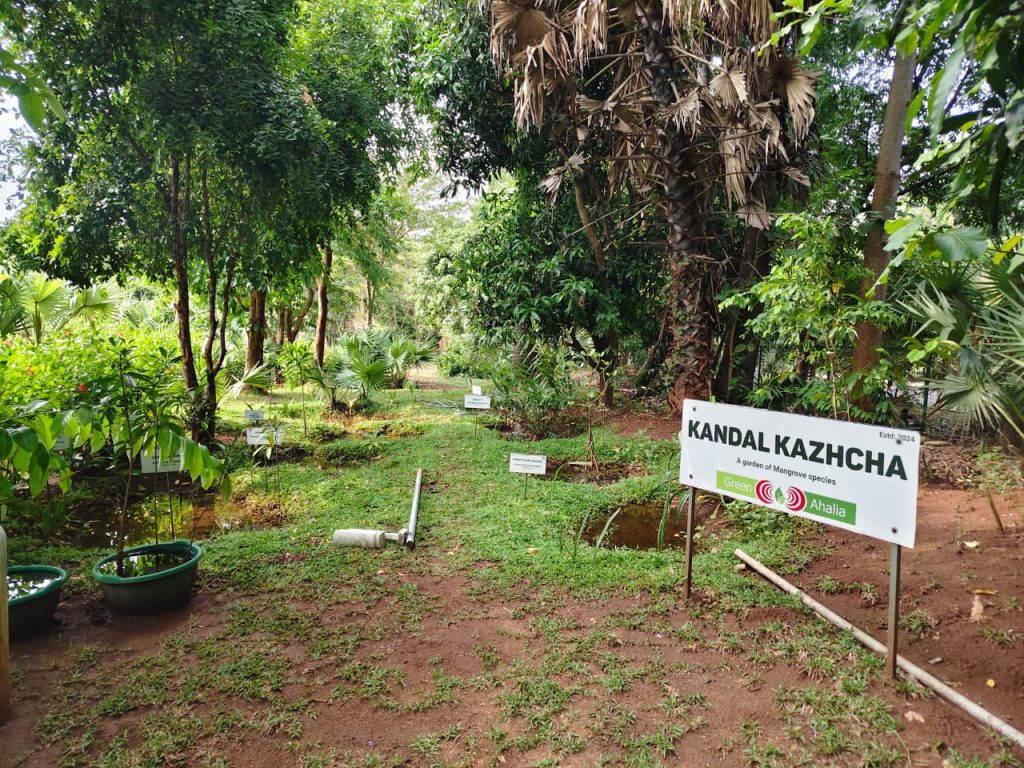
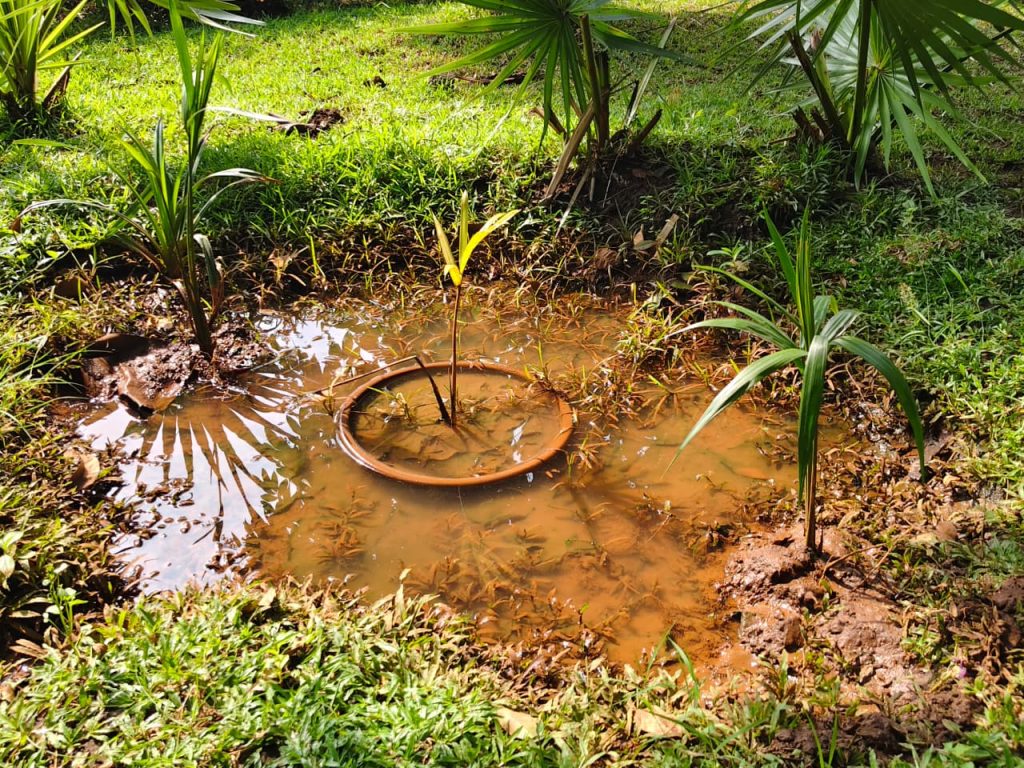
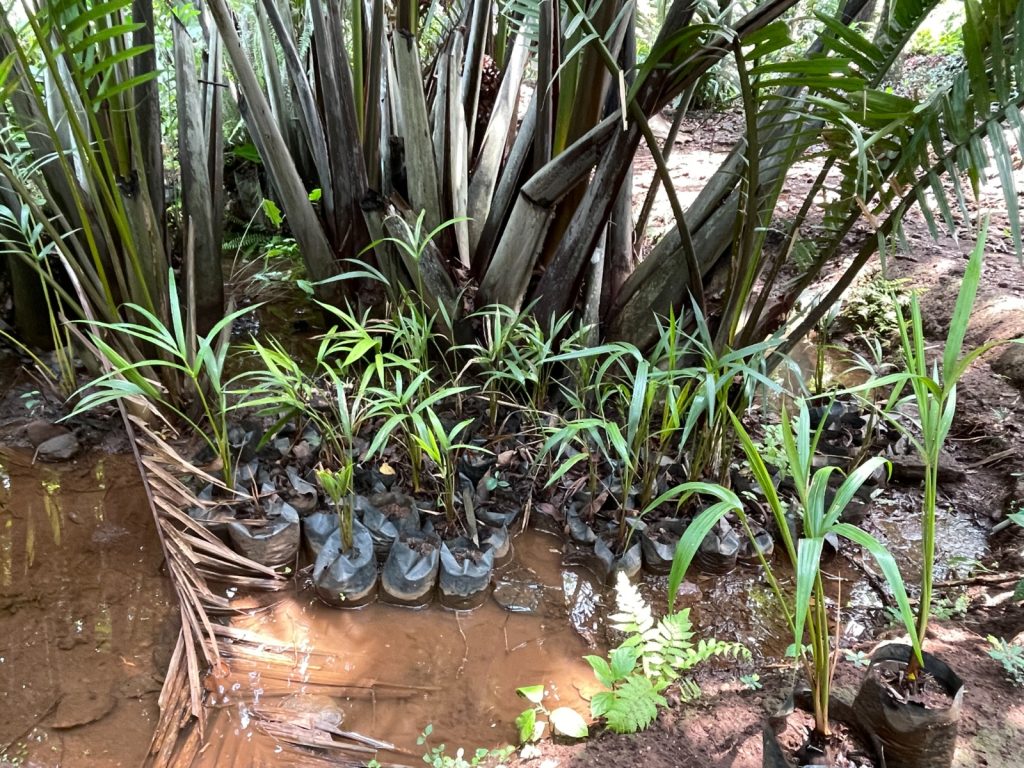
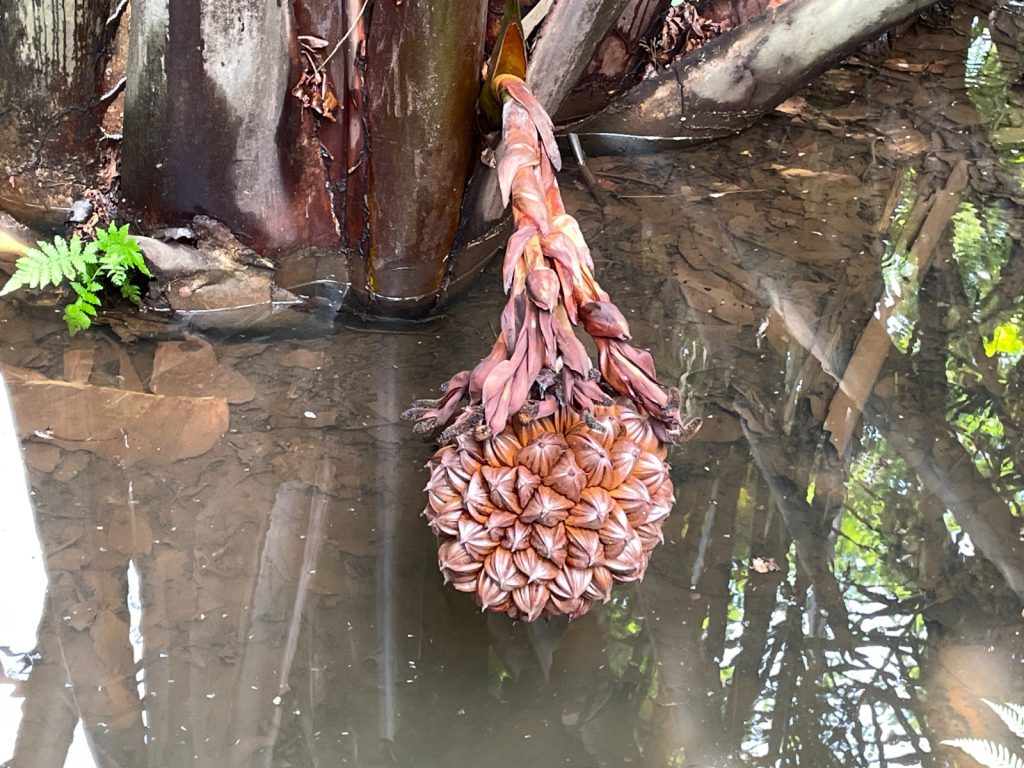
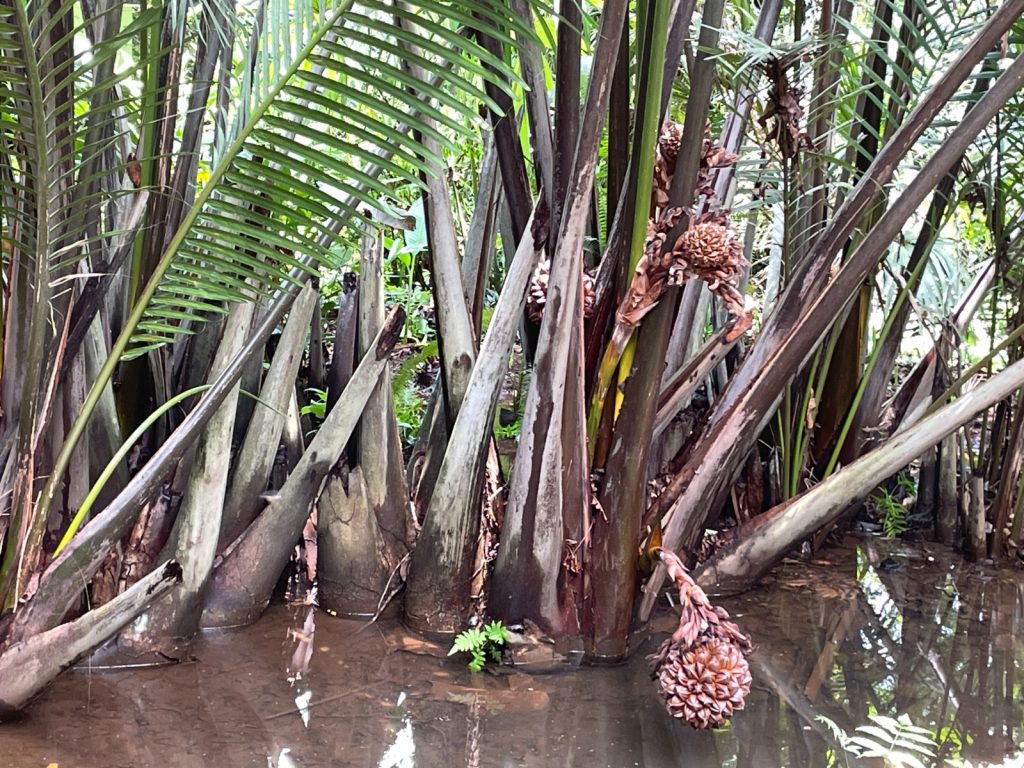
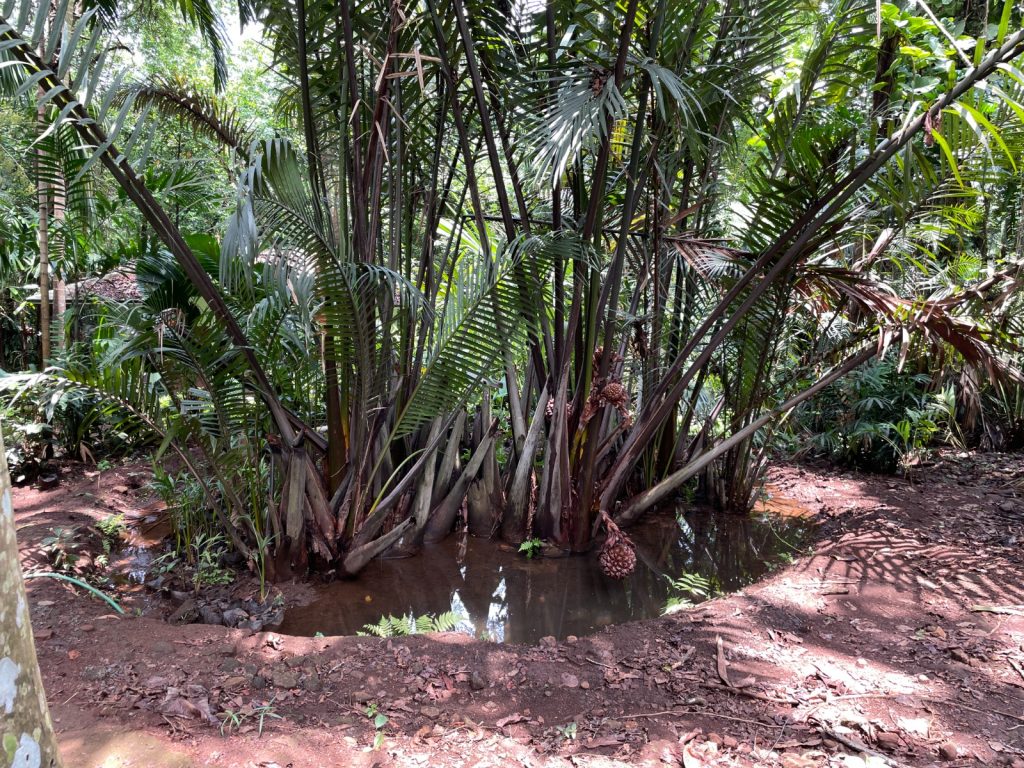
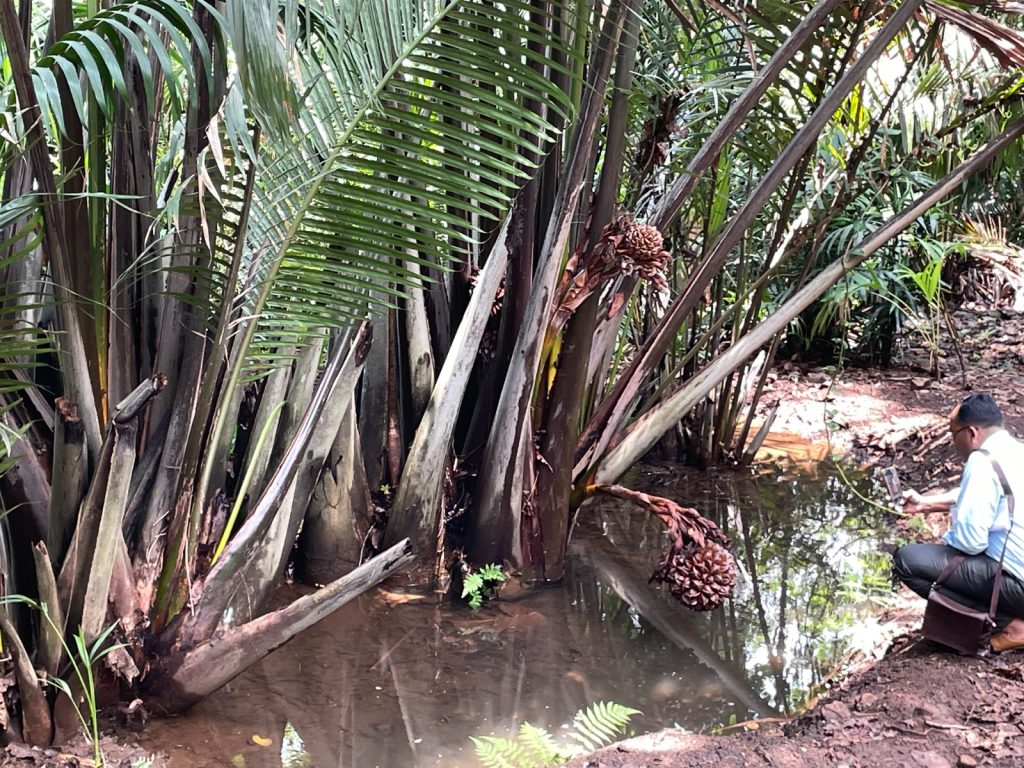
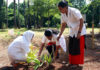
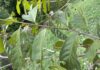
Nypa fruticans, a distinctive member of the family Arecaceae commonly known as Nipa Palm or Mangrove Palm, is naturally distributed in the coastal ecosystems of South and Southeast Asia. Unlike most palms, it possesses a creeping underground stem embedded in muddy saline habitats, while its large pinnate leaves and inflorescences emerge above the ground. Nypa palm plays a crucial role in shoreline stabilization. The palm bears characteristic globose fruit clusters composed of woody angular fruits dispersed by tidal waters. Traditionally, Nypa fruticans has immense socioeconomic importance, as its leaves are widely used for thatching, weaving, baskets and handicrafts, while the sap from the inflorescence is processed into sugar, jaggery, vinegar, toddy, alcohol, and bioethanol production. Due to its ecological significance and multiple traditional uses, the conservation of this unique mangrove palm is important. Green Ahalia has introduced the species with KFRI support in our theme garden Kandal Kazhcha – a garden of mangrove plants. In the district Green Ahalia garden only has mangrove plants garden.
(Reference: A Field Guide to the Palms of India by C. Renuka and V.B. Sreekumar. The photos of Nypa are from KFRI Palmetum)